This illustration titled, "To Johnny_ with Love from Mom!" explains that "more than 70% of Eureka's employees are women and they making gas masks, signaling devices, the small but powerful precision control motors vital to our fighting planes." It's an interesting example of the role crucial role women played at the home front during World War II.
(b.1907 - 2006) American Illustrator, Commercial Artist during the Golden Age for Classic Illustration contact: atrakadrew@gmail.com
Showing posts with label wally. Show all posts
Friday, April 5, 2013
Friday, December 21, 2012
1943 Packard Precision-Built Power Advertisement
This series of illustrations was produced for Packard Motor Car Company of Detroit, Michigan during World War II.
Packard was a major competitor to other manufacturing giants such as General Motors and Ford. Like GM, the company mass produced high-precision parts for the US Military during World War Two.
This advertisement includes no less than a dozen drawings that make up the commercial's composition.
| The Supercharger rotates at 25,00 RPMs! Faster than the speed of sound! |
Friday, November 30, 2012
1955 American Legion Cover: The Statue of Liberty
A great advantage of working for an art conglomerate like the Charles E. Cooper Studio in mid-twentieth century New York City is that it can bring exposure, recognition, and prestige to an artist. For decades, the CEC Studio attracted, developed and promoted an astounding number talented artists such as James Bama, Sheila Beckett, Bernie D'Andrea, Stevan Dohanos, George Hughes, Al Parker, Coby Whitmore, and Jon Whitcomb.
![]() |
| Pages 2-3 of "Facts & Figures About Charles E. Cooper, Inc." |
You'll find their commercial art throughout all of the most recognized magazines of America's past. And on their covers. Many of them are in the Illustrator Hall of Fame today. They also represented brands that we consider today icons of American industry and commerce such as Ford, Cambell, General Electric and General Motors.
So it was quite a stroke of luck and fortune that Walter D. Richards came to work there starting in the late 1930s. He was pulled into the studio in large part because of his friend and fellow artist Stevan Dohanos. They had met in Cleveland and had studied together under the tutelage of the lithographer and print artist Rockwell Kent.
One productive relationship that stemmed from Walter's time at the CEC was with the American Legion Magazine. Walter DuBois Richards illustrated no less than fifteen covers for the American Legion Magazine over the better part of a decade. His first cover for this magazine (that I know of) is an animated scene of two men bowling, published in February of 1949. His final cover was published in June of 1957. Over the next three decades Wally would produce covers for Argosy Magazine, The Coronet, Men True Adventure, Male, Outdoor Life, Medical Times and more.
This particular blog post focuses on his August 1955 cover. It is a scene of tourists on a ferry heading out to visit the Statue of Liberty in New York Harbor.
| The American Legion Magazine August 1955 edition. Cover by Walter DuBois Richards. |
This is a particularly fun post because I've found some provenance for the August cover in the form of field research photography. It was buried and undeveloped in the mass of negatives Wally or Glenny had preserved over the decades.
I highlighted areas of the photograph that Wally used in his cover for American Legion Magazine.
If you look carefully at these pictures you can find the subjects he used for the illustration.
You can find the complete roll Walter took in my Flickr account for this blog by clicking on any of the photographs or scans in this post.
Saturday, September 29, 2012
The Early Years In Black And White
They are dangerous and hard to handle so I've only looked at a handful of them. They consist of mostly family scenes, but some are field research he conducted for his illustrations, and some may be of him and his fellow artist friends from inside his studio at home or the Charles E. Cooper Studio in New York.
While these rolls have been developed into negatives, scanning them is no easy task. The older roles have a layer of nitrate embedded into the exposed side of the film stock, which is fascinating to look at but extremely volatile: if ignited it will literally continue to burn even under water. I don't have the funds to send them off to some specialty store, nor do I feel comfortable mailing such rare and intrinsically valuable material.
Enter Benjamin Lipiecki. He's a friend and coworker, a recent graduate from Emerson College who has a degree in Digital post-production. He has a love for old cameras and old film, with quite an impressive collection of his own, and approaches his material possessions and projects with a keen eye, thorough and scientific. He's got a respect for old film like the rolls I have inherited. It's because of my grandpa, my father and Ben that we are finally, after all these years, getting to see this film come to life in a photograph format: high resolution scans on a computer screen.
Thanks again to all who have read this blog! 2,600 views from around the world and counting!
Tuesday, July 10, 2012
The 1946 Directory of United States Illustrators
This was a great discovery in a box of old books: a compact beat-up binder titled "Official Directory of American Advertising Artists and Illustrators 1946."
It is more than just a directory of advertising artists and illustrators from that year (or decade depending on how you want to look at it).
| Walter D. Richards, Illustrator #617 |
Hmmmm. I've read that even by the 1940s a very large portion of all advertising in the United States (probably the world for that matter) was hand drawn. You'd think there'd've been more than 104 entities representing at least one artist in the country. Then again, when you see the list of companies a label like the Charles E. Cooper Studio held as clients, maybe 104 'representatives' is realistic.
But enough of this boring rumination. For the fun of it, I've typed out each category and sub-category that is found in the directory. Eventually, I would like to include the number of corresponding artists in each discipline. I think there is some fun in the statistics. Better yet, there might be someone reading this who is actually qualified (not me) to have an opinion or observation about it.
7 Types of Illustration and 132 Sub-Categories
Illustration: 96 sub-categories ____ artists (numbers to be added later)
Abstracts:
Accessories (men's shoes):
Adventure:
Advertising:
Airbrush:
Americana: See Historical
Airplanes (aviation):
Animals:
Animation:
Architectural:
Art:
Automobiles:
Birds-Eye: See Outdoors
Black and White:
Book:
Calenders:
Cartoons:
Character:
Children:
Color:
Commercial Art:
Comprehensives:
Composition:
Continuities:
Cosmetics:
Covers:
Crayon:
Decorative:
Diagrams: See Technical
Drybrush:
Drawings:
Editorial:
Fantasy:
Fashion:
Fiction:
Figures:
Fine Arts:
Finished Art:
Flowers:
Furniture:
General:
Genre:
Girls:
Glamour:
Gnomes:
Heads:
Historical:
Housefurnishings:
Human Interest:
Humor:
Imaginative:
Illustration:
Informative:
Industrial:
Interiors:
Magazine:
Marine:
Mechanical:
Medical:
Merchandise:
Military:
Modern:
Monochrome:
Murals:
Music Interpretation:
Object:
Oil:
Oriental:
Outdoors:
Painting:
Pastels:
Pictorial:
Portraits:
Products:
Realistic:
Scratchboard:
Sea Subjects:
Serious:
Shoes:
Sketches:
Sports:
Spot:
Still-Life:
Story:
Strips:
Stylized:
Surrealist:
Symbolic:
Technical:
Teenage:
Tempera:
Textiles:
Wash:
Watercolor:
Western Action:
Woodcut:
Design: 21 sub-categories ____ Artists
Book:
Calligraphy:
Cartographers:
Coats-of-Arms:
Decoration:
Design:
Engrossing:
Graphic:
Heraldry:
Humorous:
Industrial:
Jewerly:
Labels:
Layout:
Lettering:
Letterheads:
Maps:
Packaging:
Trade-Mark:
Symbolic:
Typographical:
Posters & Displays: ____ Artists
Art Direction: ____ Artists
Art Director:
Catalog:
Complete Advertisement:
Consultant:
Creative:
Visualizer:
Retouching: ____ Artists
Color:
Retouching:
General: ____ Artists
Commercial Art, Presentation, Rendering:
Sculpture: ____ Artists
Clay Modeling:
Moulage:
Paper Sculpture:
Sculpture:
What percentage of the artists are in each category ____?
What percentage of the artists are in each sub-category ____?
Saturday, April 14, 2012
1947 Univis Lens: See what you're missing!
This illustration by Wally appeared in Time Magazine on May 12, 1947. At the time he was working for the Charles E. Cooper studio in New York City.
The Univis Lens Company was a manufacturer of Bifocal and Trifocal Lenses.
Trifocals are advertised here to 'clear up that arm's-length zone of blur.'
Friday, March 30, 2012
Bad Medicine For Big Bombers: An Illustration For Westinghouse Electric
It's easy to gravitate to Walter DuBois Richards's World War II illustrations. While his career spanned nearly seven decades, there is a certain excitement and awe connected to this four year period that draws in my attention.
This action filled illustration by WDR gives us a good idea of just how intense a naval battle could get. The above scene seems to depict the British Navy's QF 2 Pounder naval gun, also known as the 'pom pom.'
The Westinghouse Electric elevator company division was given the responsibility of producing gun mounts that controlled the aiming of anti-aircraft artillery guns or batteries found on many US Navy warships.
This illustration advertisement appeared in Collier's on May 2, 1942. Like most American corporations during WWII like GE and GM, Westinghouse Electric devoted most of it's resources to giving the allies an edge over it's enemies, and wanted the home front to know it.
This action filled illustration by WDR gives us a good idea of just how intense a naval battle could get. The above scene seems to depict the British Navy's QF 2 Pounder naval gun, also known as the 'pom pom.'
This illustration advertisement appeared in Collier's on May 2, 1942. Like most American corporations during WWII like GE and GM, Westinghouse Electric devoted most of it's resources to giving the allies an edge over it's enemies, and wanted the home front to know it.
Labels:
1940s,
1944,
anti-aircraft,
collier's,
general electric,
navy,
pom pom,
wally,
wdr,
World War,
ww2,
WWII
Thursday, March 8, 2012
A 1955 Sports Illustrated Illustration
This Sports Illustrated ad drawn by Walter Richards was published in late April, 1955. According to an article on the Dodgers found on the backside of this page (and at the bottom of this post), about one week earlier the Brooklyn team had broken Major League Baseball's record for most wins (10) to start a season. Opening day for the Dodgers in 1955 was April 13.

When he drew this lithograph, Wally was probably still working for the Steven Lions Studio in New York City.
Glenora always told me that one of Wally's strengths as an illustrator was his ability to show a variety of emotions in his subjects.
The article below revealed several important clues narrowing the date of Wally's illustration to late April of 1955.
When he drew this lithograph, Wally was probably still working for the Steven Lions Studio in New York City.
Glenora always told me that one of Wally's strengths as an illustrator was his ability to show a variety of emotions in his subjects.
I think this illustration is a good example of what she was talking about.
The article below revealed several important clues narrowing the date of Wally's illustration to late April of 1955.
Labels:
1950s,
1955,
ball park,
baseball,
dubois,
illustrated,
lithograph,
richards,
sports,
wally,
walter,
wdr
Friday, March 2, 2012
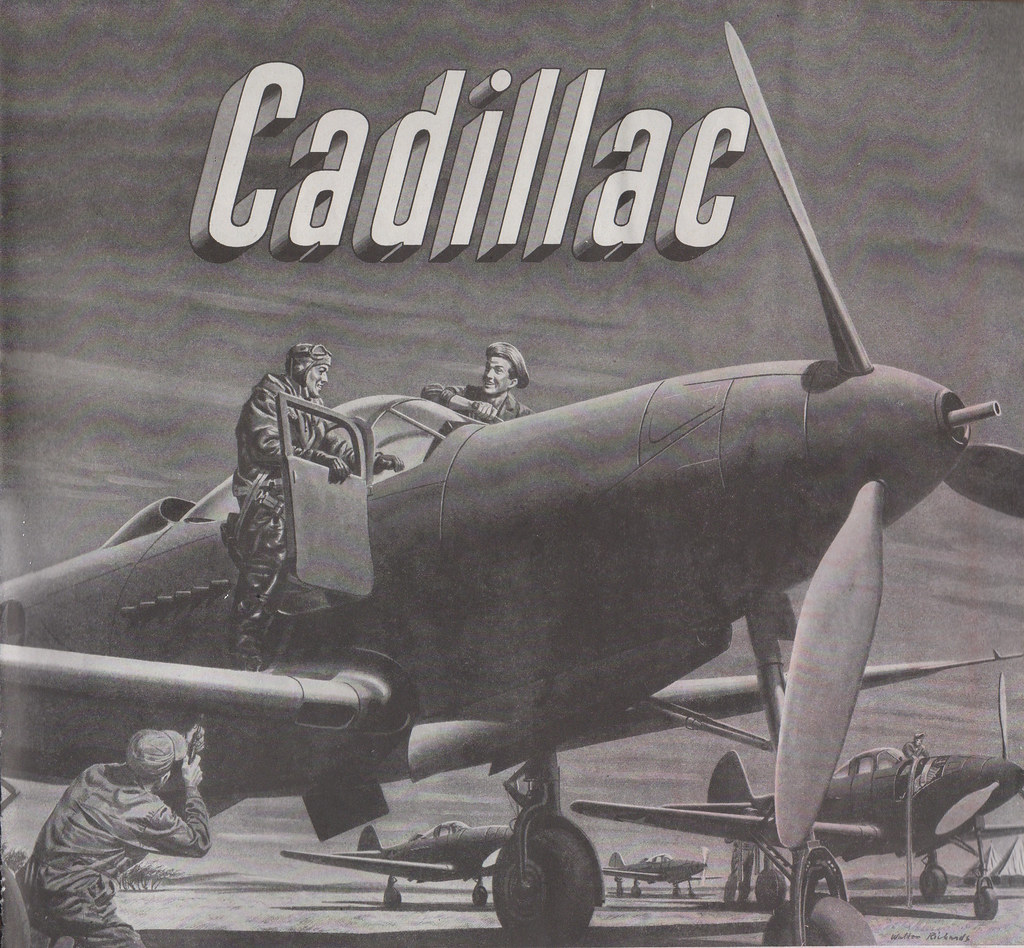
A 1943 Cadillac / Fighter Plane Illustration
Soon after joining the Charles E. Cooper Studio** in the late 1930s, Walter Richards began producing lithographic illustrations for Cadillac, a division of General Motors. Its possible that Wally's work for Cadillac in the 1930s led into the various illustrations he made for General Motors throughout World War II and beyond. For example, Walter produced a series of tank illustrations for Cadillac, as well as an illustration for the Bliss-Leavitt Mark 13 torpedo built by Pontiac, also a division of General Motors.
This illustration, published in Collier's on September 11, 1943, is meant to raise awareness that during WWII General Motors mass-produced precision parts for various machines; such as the Allison transmission found in the above fighter plane.
The detail seen in the ground crew's clothes, their ripples, their shadows and reflections; it's all very impressive to me. I remember that Wally enjoyed working in this war-time atmosphere. With a wink he would tell me that he was an officer in the military during WWII, and brandish an official-looking military identification. He explained to me he was given his rank so that he could have priority flying from one assignment to another.
Starting in 1939, Cadillac began to focus it's manufacturing on producing precision parts for the liquid cooled Allison aircraft engine. Turns out, WDR made illustrations profiling the Allison Transmission as well. Impressively, Cadillac had to mass produce with extreme accuracy the machining of over 170 different aircraft parts. Many of these machine parts required a tolerance grade of no more than three-ten thousandth of an inch. Wow.
I'm always interested in any further thoughts/knowledge you (the reader) may know about the illustrations I post, for example:
What type of plane is used for this illustration?
I see there are tents in the background, and the trees seem perhaps tropical in nature? Is this an airfield in the South Pacific?
** This is a link to Leif Peng's Blog on illustration art titled "Today's Inspiration." It is an endless and priceless source of information from which I have benefited many times over again and am forever grateful for.
This illustration, published in Collier's on September 11, 1943, is meant to raise awareness that during WWII General Motors mass-produced precision parts for various machines; such as the Allison transmission found in the above fighter plane.
The detail seen in the ground crew's clothes, their ripples, their shadows and reflections; it's all very impressive to me. I remember that Wally enjoyed working in this war-time atmosphere. With a wink he would tell me that he was an officer in the military during WWII, and brandish an official-looking military identification. He explained to me he was given his rank so that he could have priority flying from one assignment to another.
| It's worth a read. Notice the "Buy War Bonds And Stamps" stamp. |
Starting in 1939, Cadillac began to focus it's manufacturing on producing precision parts for the liquid cooled Allison aircraft engine. Turns out, WDR made illustrations profiling the Allison Transmission as well. Impressively, Cadillac had to mass produce with extreme accuracy the machining of over 170 different aircraft parts. Many of these machine parts required a tolerance grade of no more than three-ten thousandth of an inch. Wow.
I'm always interested in any further thoughts/knowledge you (the reader) may know about the illustrations I post, for example:
What type of plane is used for this illustration?
I see there are tents in the background, and the trees seem perhaps tropical in nature? Is this an airfield in the South Pacific?
** This is a link to Leif Peng's Blog on illustration art titled "Today's Inspiration." It is an endless and priceless source of information from which I have benefited many times over again and am forever grateful for.
Sunday, February 5, 2012
Complete Stamp Index: 37 Stamps
1. Frederick Douglass $.25 Prominent Americans Series Issued February 14th, 1967 Scott #1290
2. Plant for more Beautiful Cities $.06 Beautification of America Series Issued January 16th, 1969 Scott #1365
3. Plant for more Beautiful Parks $.06 Beautification of America Series Issued January 16th, 1969 Scott #1366
4. Plant for more Beautiful Highways $.06 Beautification of America Series Issued January 16th, 1969 Scott #1367
5. Plant for more Beautiful Streets $.06 Beautification of America Series Issued January 16th, 1969 Scott #1368
6. American Bald Eagle $.06 Natural History Series Issued May 6th, 1970 Scott #1387
7. Save Our Soil $.06 Anti-Pollution Series Issued October 28th, 1970 Scott #1410
8. Save Our Cities $.06 Anti-Pollution Series Issued October 28th, 1970 Scott #1411
9. Save Our Water $.06 Anti-Pollution Series Issued October 28th, 1970 Scott #1412
10. Save Our Air $.06 Anti-Pollution Series Issued October 28th, 1970 Scott #1413
11. Cape Hatteras Seashore - Upper Left $.02 National Parks Centennial Series Issued April 5th, 1972 Scott #1448
12. Cape Hatteras Seashore - Upper Right $.02 National Parks Centennial Series Issued April 5th, 1972 Scott #1449
13. Cape Hatteras Seashore - Lower Left $.02 National Parks Centennial Series Issued April 5th, 1972 Scott #1450
14. Cape Hatteras Seashore - Lower Right $.02 National Parks Centennial Series Issued April 5th, 1972 Scott #1451
15. Paul Laurance Dunbar $.10 Issued May 1st, 1975 Scott #1554
16. Giant Sequoia Sequoiadendron giganteum $.15 Tree Series Issued October 9th, 1978 Scott #1764
17. White Pine Pinus strobus $.15 Tree Series Issued October 9th, 1978 Scott #1765
18. White Oak Quercus alba $.15 Tree Series Issued October 9th, 1978 Scott #1766
19. Gray Birch Betuia populifolis $.15 Tree Series Issued October 9th, 1978 Scott #1767
20. Jefferson 1743 - 1826 Virginia Rotunda $.15 American Architecture Series Issued June 4th, 1979 Scott #1779
21. Latrobe 1764 - 1820 Baltimore Cathedral $.15 American Architecture Series Issued June 4th, 1979 Scott #1780
22. Bulfinch 1763 - 1844 Boston State House $.15 American Architecture Series Issued June 4th, 1979 Scott #1781
23. Strictland 1788 - 1854 Philadelphia Exchange $.15 American Architecture Series Issued June 4th, 1979 Scott #1782
24. Renwick 1818 - 1895 Smithsonian Washington $.15 American Architecture Series Issued October 9th, 1980 Scott #1838
25. Richardson 1838 - 1886 Trinity Church Boston $.15 American Architecture Series Issued October 9th, 1980 Scott #1839
26. Furness 1839 - 1912 Penn Academy Philadelphia $.15 American Architecture Series Issued October 9th, 1980 Scott #1840
27. AJ Davis 1803 - 1892 Lyndhurst Tarrytown, NY $.15 American Architecture Series Issued October 9th, 1980 Scott #1841
28. Stanford White 1853 - 1906 NYU Library New York $.18 American Architecture Series Issued August 28th, 1981 Scott #1928
29. Richard Morris Hunt 1828 - 1895 Biltmore Asheville, NC $.18 American Architecture Series Issued August 28th, 1981 Scott #1929
30. Bernard Maybeck 1862 - 1957 Palace of Arts San Francisco $.18 American Architecture Series Issued August 28th, 1981 Scott #1930
31. Louis Sullivan 1856 - 1924 Farmers' Bank Owatonna Minn $.18 American Architecture Series Issued August 28th, 1981 Scott #1931
32. James Hoban White House Architect
32a. Eire (Ireland) .18 $ Issued in Ireland September 29th, 1981 No Scott #
32b. USA $.18 Issued October 18, 1981 Scott #1935
32c. USA $.20 Issued October 18, 1981 Scott #1936
33. Frank Lloyd Wright 1867 - 1959 Fallingwater Mill Run, PA $.20 American Architecture Series Issued September 30, 1982 Scott #2019
34. Mies van der Rohe 1886 - 1969 Illinois Inst Tech Chicago $.20 American Architecture Series Issued September 30, 1982 Scott #2020
35. Walter Gropius 1883 - 1969 Gropius House Lincoln, Ma $.20 American Architecture Series Issued September 30, 1982 Scott #2021
36. Eero Saarinen 1910 - 1962 Dulles Airport Washington, D.C. $.20 American Architecture Series Issued September 30, 1982 Scott #2022
37. Timberline Lodge Mt. Hood, Oregon - Postal Card or Post Card $.14 Issued September 28, 1987 Scott #UX119
2. Plant for more Beautiful Cities $.06 Beautification of America Series Issued January 16th, 1969 Scott #1365
3. Plant for more Beautiful Parks $.06 Beautification of America Series Issued January 16th, 1969 Scott #1366
4. Plant for more Beautiful Highways $.06 Beautification of America Series Issued January 16th, 1969 Scott #1367
5. Plant for more Beautiful Streets $.06 Beautification of America Series Issued January 16th, 1969 Scott #1368
6. American Bald Eagle $.06 Natural History Series Issued May 6th, 1970 Scott #1387
7. Save Our Soil $.06 Anti-Pollution Series Issued October 28th, 1970 Scott #1410
8. Save Our Cities $.06 Anti-Pollution Series Issued October 28th, 1970 Scott #1411
9. Save Our Water $.06 Anti-Pollution Series Issued October 28th, 1970 Scott #1412
10. Save Our Air $.06 Anti-Pollution Series Issued October 28th, 1970 Scott #1413
11. Cape Hatteras Seashore - Upper Left $.02 National Parks Centennial Series Issued April 5th, 1972 Scott #1448
12. Cape Hatteras Seashore - Upper Right $.02 National Parks Centennial Series Issued April 5th, 1972 Scott #1449
13. Cape Hatteras Seashore - Lower Left $.02 National Parks Centennial Series Issued April 5th, 1972 Scott #1450
14. Cape Hatteras Seashore - Lower Right $.02 National Parks Centennial Series Issued April 5th, 1972 Scott #1451
15. Paul Laurance Dunbar $.10 Issued May 1st, 1975 Scott #1554
16. Giant Sequoia Sequoiadendron giganteum $.15 Tree Series Issued October 9th, 1978 Scott #1764
17. White Pine Pinus strobus $.15 Tree Series Issued October 9th, 1978 Scott #1765
18. White Oak Quercus alba $.15 Tree Series Issued October 9th, 1978 Scott #1766
19. Gray Birch Betuia populifolis $.15 Tree Series Issued October 9th, 1978 Scott #1767
20. Jefferson 1743 - 1826 Virginia Rotunda $.15 American Architecture Series Issued June 4th, 1979 Scott #1779
21. Latrobe 1764 - 1820 Baltimore Cathedral $.15 American Architecture Series Issued June 4th, 1979 Scott #1780
22. Bulfinch 1763 - 1844 Boston State House $.15 American Architecture Series Issued June 4th, 1979 Scott #1781
23. Strictland 1788 - 1854 Philadelphia Exchange $.15 American Architecture Series Issued June 4th, 1979 Scott #1782
24. Renwick 1818 - 1895 Smithsonian Washington $.15 American Architecture Series Issued October 9th, 1980 Scott #1838
25. Richardson 1838 - 1886 Trinity Church Boston $.15 American Architecture Series Issued October 9th, 1980 Scott #1839
26. Furness 1839 - 1912 Penn Academy Philadelphia $.15 American Architecture Series Issued October 9th, 1980 Scott #1840
27. AJ Davis 1803 - 1892 Lyndhurst Tarrytown, NY $.15 American Architecture Series Issued October 9th, 1980 Scott #1841
28. Stanford White 1853 - 1906 NYU Library New York $.18 American Architecture Series Issued August 28th, 1981 Scott #1928
29. Richard Morris Hunt 1828 - 1895 Biltmore Asheville, NC $.18 American Architecture Series Issued August 28th, 1981 Scott #1929
30. Bernard Maybeck 1862 - 1957 Palace of Arts San Francisco $.18 American Architecture Series Issued August 28th, 1981 Scott #1930
31. Louis Sullivan 1856 - 1924 Farmers' Bank Owatonna Minn $.18 American Architecture Series Issued August 28th, 1981 Scott #1931
32. James Hoban White House Architect
32a. Eire (Ireland) .18 $ Issued in Ireland September 29th, 1981 No Scott #
32b. USA $.18 Issued October 18, 1981 Scott #1935
32c. USA $.20 Issued October 18, 1981 Scott #1936
33. Frank Lloyd Wright 1867 - 1959 Fallingwater Mill Run, PA $.20 American Architecture Series Issued September 30, 1982 Scott #2019
34. Mies van der Rohe 1886 - 1969 Illinois Inst Tech Chicago $.20 American Architecture Series Issued September 30, 1982 Scott #2020
35. Walter Gropius 1883 - 1969 Gropius House Lincoln, Ma $.20 American Architecture Series Issued September 30, 1982 Scott #2021
36. Eero Saarinen 1910 - 1962 Dulles Airport Washington, D.C. $.20 American Architecture Series Issued September 30, 1982 Scott #2022
37. Timberline Lodge Mt. Hood, Oregon - Postal Card or Post Card $.14 Issued September 28, 1987 Scott #UX119
Labels:
architecture,
douglass,
dunbar,
eagle,
hatteras,
hoban,
parks,
pollution,
richards,
timberline,
trees,
wally,
walter,
wdr
Sunday, January 8, 2012
LifeGuard Safety Tubes - A Goodyear Tire Commercial from 1947
Over a several year period following WWII, Wally did a series of advertisements for Goodyear's product, the LifeGuard Safety Tube. This one appeared in the Saturday Evening Post in November of 1947. According to this startling advertisement, the LifeGuard Safety Tube could save your life should you blow out a tire driving along a narrow cliff-ridged icy road in Minnesota. Considering safety standards in your average car in the 1940s, I should think even at 25 mph a tire blowout could have more serious consequences than today, no matter what the scenario. After a (very) brief online search, it appears that Goodyear first introduced this extra-tube-in-a-tire in 1934 and it evolved into a variety of products over the next half-century.
Wally made several of these commercials featuring these 'BANG' scenarios, but I found this one a bit amusing. Can somebody explain why these hunters are using a red sedan with no rack for a hunting trip?
Labels:
1940s,
accident,
advertisement,
illustration,
red,
sedan,
sep,
wally,
walter,
wdr
Friday, December 30, 2011
Walter DuBois Richards: Commercial Illustrator, Artist
| Walter DuBois Richards in the prime of his career, circa 1940s. |
| Wally at work in New York City probably at the Charles E. Cooper Studio. Circa 1930s. |
Labels:
artist,
canaan,
cleveland,
connecticut,
lithographer,
ohio,
printer,
teacher,
wally,
wdr
Subscribe to:
Posts (Atom)